

Saving money is an important step towards financial security, but deciding where to put those savings can be just as significant as building them. For Belgian savers, traditional savings accounts offer familiarity and relatively straightforward access to cash. However, changing economic conditions, inflation and developments in global financial markets have encouraged many individuals to consider opportunities beyond their home country.
International markets can provide access to a broader range of investments, industries and currencies. Investing across borders also introduces additional considerations, including taxation, exchange rate fluctuations and regulatory differences. Understanding these factors can help Belgian savers make informed decisions, balance potential returns against risk and build a financial strategy suited to their long-term goals.
Understanding the Benefits of International Diversification
One of the main reasons investors explore international markets is diversification. Keeping all investments within a single country can expose a portfolio to risks associated with that country’s economic performance, political environment or dominant industries. Investing internationally can spread exposure across different economies, potentially reducing the impact of difficulties in any one market.
For Belgian savers, international diversification may provide access to businesses and sectors that are less represented on the domestic market. Global technology companies, healthcare innovators, renewable energy providers and emerging-market businesses can offer different growth opportunities. However, diversification does not eliminate investment risk, and international assets can decline in value alongside domestic investments during periods of global economic uncertainty.
The appropriate level of international exposure depends on an individual’s circumstances, investment horizon and tolerance for losses. Someone saving for a home deposit within two years will generally have different priorities from someone investing for retirement over several decades. Before selecting investments, savers should establish their objectives and decide how much money they can afford to expose to market fluctuations.
Evaluating Different International Investment Opportunities
International markets include several investment categories, each with distinct characteristics. Stocks provide ownership in individual companies, while bonds can offer interest income and exposure to government or corporate borrowing. Exchange-traded funds and mutual funds allow investors to access a collection of assets through a single investment, making diversification more accessible without requiring them to research every company individually.
Broadly diversified funds that track international indices can be a practical starting point for investors seeking exposure to multiple countries. Nevertheless, the underlying holdings, geographical allocation, management costs and investment strategy deserve careful examination. A fund labelled global may still have substantial exposure to a limited number of countries or large companies, so its actual composition matters more than its name.
Investors researching available options can use financial education resources and investment platforms to compare markets, instruments and potential costs. Those wishing to see more about investment concepts can explore educational material covering asset classes, portfolio construction and market fundamentals. Independent research should complement, rather than replace, an assessment of personal financial needs and the risks associated with each investment.
Managing Currency Risk and Market Volatility
Currency movements are particularly important when Belgian residents invest in assets denominated in foreign currencies. Although Belgium uses the euro, international investments may involve the US dollar, British pound, Swiss franc or other currencies. Changes in exchange rates can affect the value of an investment when its proceeds are converted back into euros.
For example, a Belgian investor may purchase shares in a US company that increase in dollar value. If the dollar weakens substantially against the euro, the investor’s gain may be reduced when converted into euros. The opposite can also happen, with favourable currency movements improving returns. Currency-hedged funds can reduce certain exchange rate exposures, although hedging introduces costs and does not remove every source of risk.
Market volatility also requires a disciplined approach. International investments can be affected by interest rate decisions, geopolitical tensions, trade restrictions and changes in economic growth. Rather than attempting to predict every market movement, investors can consider regular contributions, a diversified portfolio and periodic reviews. Maintaining an appropriate cash reserve can also prevent the need to sell investments at unfavourable prices when unexpected expenses arise.
Understanding Belgian Tax and Regulatory Considerations
Cross-border investing can make tax reporting more complicated. Belgian tax residents should understand how investment income, dividends, interest payments and capital gains may be treated under the rules applicable to their circumstances. The treatment can depend on the investment type, the investor’s status and any relevant changes in legislation.
Foreign investments may also be subject to withholding taxes in the country where the income originates. Tax treaties and available relief mechanisms can sometimes reduce double taxation, but investors should not assume that foreign tax automatically replaces their Belgian obligations. Belgian securities accounts and certain foreign accounts may also involve specific reporting requirements. Consulting current guidance from the Belgian tax authorities or a qualified tax professional can help clarify these responsibilities before investing.
Conclusion
Exploring international markets can give Belgian savers greater choice, broader diversification and access to opportunities beyond their domestic economy. However, these benefits come with responsibilities, including understanding currency exposure, comparing investment costs and meeting Belgian tax and reporting obligations.
By researching investment options carefully, using appropriately regulated providers and aligning decisions with their financial goals, savers can approach global investing with greater confidence. A measured, long-term strategy built around diversification, realistic expectations and informed decision-making offers a more sustainable foundation than chasing rapid returns or reacting to every market headline.



More Stories
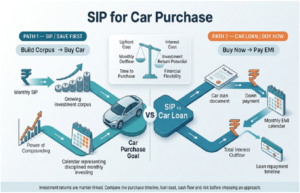
SIP for Car Purchase: Compare Saving Through SIP vs Taking a Car Loan
Overseas R&D Expenditure: Why UK Companies Need a Local-Country Claim Strategy
The Infrastructure Move Smart CIOs Are Making Before Everyone Else Catches On